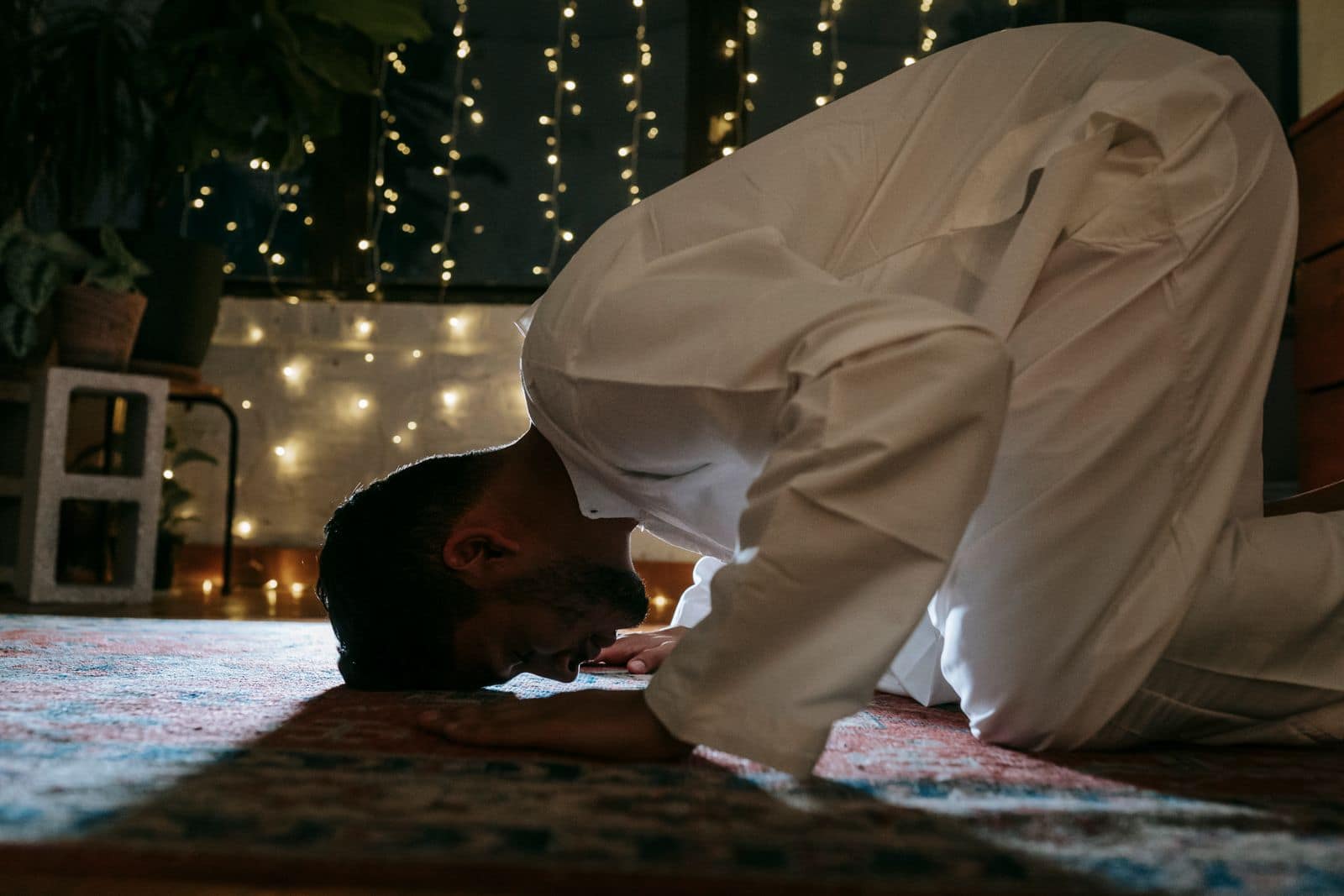
How to Make Dua the Prophetic Way (Step by Step)
In short
To make dua the way the Prophet ﷺ taught, move through four steps: (1) praise Allah (hamd), (2) send salawat upon the Prophet ﷺ, (3) call on Allah by the Names that fit your need — Ar-Razzaq for provision, Ash-Shafi for healing — then (4) make your request in your own language, and close with salawat again (Tirmidhi 3477). You do not need eloquent Arabic — only honesty and the right order.
Every Muslim makes dua — but many of us quietly wonder whether we are doing it "right." The good news: the Prophet ﷺ gave us a clear, gentle way to make dua, and once you know it, it stays with you for life. Here is how to make dua the Prophetic way, step by step.
Dua is worship, not a formality
First, a reminder that changes everything: dua is not a side activity. It is at the very heart of your relationship with Allah.
"Call upon Me; I will respond to you." (Qur'an 40:60)
Allah is not distant, and you need no intermediary:
"And when My servants ask you about Me — I am near. I respond to the call of the one who calls upon Me." (Qur'an 2:186)
So approach dua not as a ritual to get right under pressure, but as a conversation with the One who is already listening.
The Prophetic structure: 4 simple steps
The Prophet ﷺ once heard a man supplicate without praising Allah or sending blessings upon him, and he taught the proper order:
When one of you prays, let him begin by glorifying and praising his Lord, then send blessings upon the Prophet ﷺ, then let him ask for whatever he wishes.
The order of dua: praise of Allah, then salawat, then your request.
That gives us four parts:
- Praise Allah (hamd). Begin with His due: "Alhamdulillah, all praise belongs to Allah, Lord of all worlds."
- Send salawat upon the Prophet ﷺ. For example: "Allahumma salli 'ala Muhammad."
- Call on Allah by His Names. Choose the Names that fit your need — Ar-Razzaq (the Provider) for rizq, Ash-Shafi (the Healer) for illness, Al-Fattah (the Opener) for closed doors.
- Present your request — then close with salawat. Ask Allah plainly for what you need, and seal it with blessings on the Prophet ﷺ again.
The etiquette (adab) that makes dua beautiful
Beyond structure, the Prophet ﷺ taught manners that open the heart:
- Ask with certainty. "Call upon Allah while certain of being answered." (Tirmidhi 3479)
- Raise your hands, face the qibla where you can, and lower your voice.
- Be persistent and repeat — there is no shame in asking for the same thing many times.
- Begin and end with praise and salawat, as above.
- Avoid rushing. The Prophet ﷺ warned against the one who says, "I made dua but was not answered." (Bukhari 6340) Trust Allah's timing and His wisdom.
The best times for dua to be answered
Dua is accepted at any time, but the Prophet ﷺ pointed us to moments when it is especially hoped for:
| Time | Source |
|---|---|
| The last third of the night | Bukhari 1145 |
| While prostrating (sujood) | Muslim 482 |
| Between the adhan and the iqama | Tirmidhi 212 |
| The hour on Friday before Maghrib | Bukhari 935, Muslim 852 |
| While fasting, until you break your fast | Tirmidhi 3598 |
| When it rains | Abu Dawud 2540 |
This is also why Nida's reminders are tied to these blessed moments rather than to arbitrary alarms.
"But I don't know how to phrase it"
This is the most common barrier — and it's not a religious problem, just a starting one. You do not need eloquent Arabic. You need honesty and the right order.
If you freeze when it's time to ask, you can lean on a tool: Nida is an AI dua generator that takes your situation and arranges your own words into this exact structure — praise, salawat, Allah's Names, then your need — without ever inventing Qur'an or hadith. It is scaffolding for sincerity, not a replacement for it.
Put it into practice today
Pick one thing weighing on you right now. Then:
- Say Alhamdulillah and praise Allah.
- Send salawat on the Prophet ﷺ.
- Call on the Name that fits — perhaps Ar-Razzaq for provision.
- Ask Allah, plainly and with certainty.
- Close with salawat.
That's it. That is dua the way it was taught — and the more you return to it, the more natural it becomes.