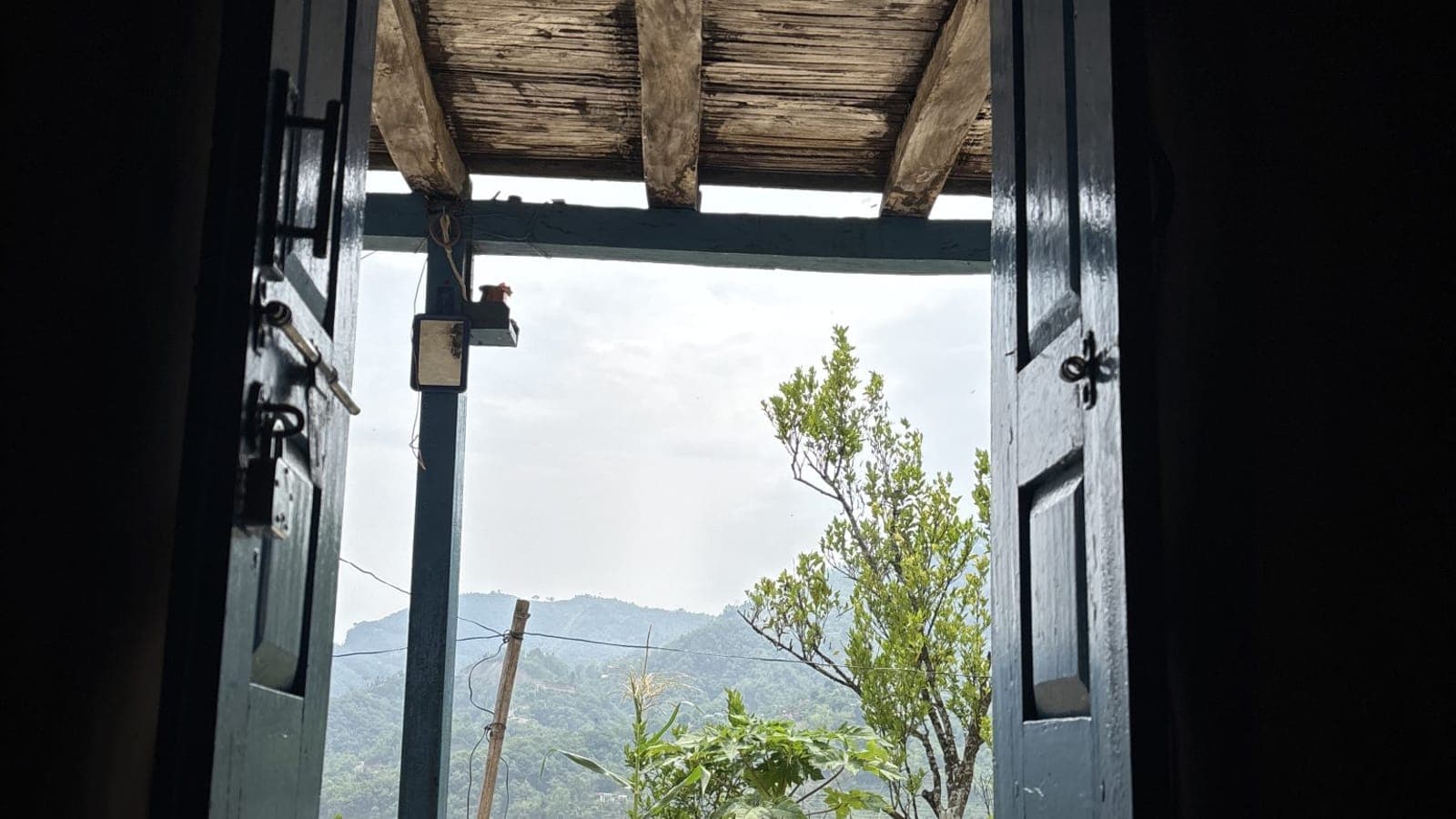
Al-Fattah: The Opener and the Judge, and How to Call on Allah When Every Door Is Closed
In short
Al-Fattah is the Name of Allah for closed doors: it comes from the Arabic root f-t-h, which means both to open what is shut (doors, hearts, provision, understanding) and to decide or judge between His servants in truth. Allah names Himself Al-Fattah in the Qur'an (34:26), paired with Al-'Alim, the All-Knowing, so His opening always flows from perfect knowledge of what you truly need. When a door will not move, you invoke Him by this Name, saying Ya Fattah, because Qur'an 7:180 instructs the believer to call on Allah by His beautiful names. Unlike manifestation, you are not commanding an outcome; you ask Al-Fattah to open what is good for you, wherever it may be, and you trust His decision.
There is a specific kind of helplessness that comes from a closed door. You have sent the application, made the call, said the right things, prayed, waited, and still nothing moves. Or you are standing at a fork you cannot read, and every path looks like a wall. The culture around you says to push harder, visualize the outcome, align your energy, trust the universe. But you have pushed, and the door has not moved, and the universe does not hold the key.
Islam gives you something better than pushing. It gives you a Name to call. Among the names Allah taught us for Himself is Al-Fattah, the Opener, the One who opens what no one else can and decides between His servants in truth. When you have run out of keys, this is the Name for your situation.
The meaning of Al-Fattah
Al-Fattah (الفَتَّاح) is built on the Arabic root f-t-h (ف ت ح), and that root is worth sitting with, because it carries a whole family of meanings at once:
- To open what is shut: a door, a lock, a sealed thing.
- To open up in a wider sense: to grant provision, to unveil understanding, to soften a hard heart.
- To grant victory or a decisive opening: the word fath is used in the Qur'an for the conquest and the clear victory Allah gives.
- To judge or decide: an older Arabic sense of fataha is to decide a dispute, to rule between two parties. A judge in classical Arabic was called al-fattah precisely because he opens the matter and settles it.
So when Allah calls Himself Al-Fattah, the Name gathers all of this. He is the One who opens what is closed, and He is the One who judges and decides between His servants in absolute truth. The two meanings are not separate: to open a matter is to decide it. When Allah opens a door for you, He has, in that same act, judged that this is what is good for you.
The form of the word matters too. Fattah is an intensive form in Arabic, the pattern of one who does something constantly and abundantly. Not one who opened once, but the One who is always opening, whose opening never runs dry. Every door that has ever swung open, in every life, for every creature, opened by His permission.
Where it appears in the Qur'an
Allah names Himself Al-Fattah directly in the Qur'an, in a verse about the final judgment, where both meanings of the Name (opening and deciding) come together:
"Say: our Lord will bring us together, then He will decide between us in truth. And He is Al-Fattah, Al-'Alim (the One who opens and decides, the All-Knowing)." (Qur'an 34:26)
Notice the pairing. Al-Fattah, the One who opens and decides, is placed right next to Al-'Alim, the All-Knowing. He does not open blindly or decide without knowledge. His opening flows from perfect knowledge of what each servant truly needs. This is why calling on Al-Fattah is never a gamble: you are asking a Knower to open for you.
The root f-t-h also runs all through the Qur'an in other forms, which fills out the picture of what this Name does:
"Whatever mercy Allah opens for people, none can withhold it; and whatever He withholds, none can release it after Him. And He is the Almighty, the Wise." (Qur'an 35:2)
Read that slowly. What He opens, no one can close. What He closes, no one can open. That single verse relocates the key. It is not in the hands of the hiring manager, the family, the market, or the person whose heart you are hoping softens. It is in the hand of Al-Fattah, and it always was.
What this Name tells us about Allah
Living with this Name changes how you meet a closed door. A few things it teaches:
Nothing is truly locked to Him. What looks like a dead end to you is a door He can open with a word. The situation that has trapped you for months is not a match for the One who opens the heavens' provision (Qur'an 51:22 speaks of it being in the heaven). Your problem is small in front of Al-Fattah.
He opens in His timing, not yours. The intensive form tells us He is always opening, but not always the door you are staring at, and not always the moment you demand. Part of trusting Al-Fattah is accepting that a door still shut today may be a mercy, and the opening may be waiting behind a better door.
His opening is also a judgment. Because the Name means both to open and to decide, when Allah opens a path for you, He has chosen it for you in truth. This is the antidote to the anxiety of decisions: you do not have to be certain you picked right, because the One deciding knows what you cannot. If you are stuck between two roads, this is the exact spirit of salat al-istikhara, the prayer where you hand the decision back to the One who opens and decides.
He asks to be asked. He did not name Himself Al-Fattah so that you would admire the word. He named Himself so that you would call on Him by it.
Calling on Allah by His Names (Qur'an 7:180)
This is not our idea. Allah Himself instructs us to take His names and use them in our du'a:
"And to Allah belong the most beautiful names, so call on Him by them." (Qur'an 7:180)
This verse is a door in itself. It means your du'a is meant to be specific to your need. When you are asking for something to open, you do not reach for just any name; you reach for the Name that fits, and you say it: Ya Fattah. You are matching your Lord's Name to your exact situation, which is how the Prophets and the righteous supplicated. A servant who is sick calls on Ash-Shafi, the Healer. A servant drowning in guilt calls on Al-Ghaffar, the Forgiver. And a servant standing before a closed door calls on Al-Fattah.
This is also, quietly, the whole difference between du'a and manifestation. In manifestation you address a nameless "universe" and try to command an outcome by the force of your own belief. In du'a you address a named Lord, by a Name He revealed, and you ask, then you leave the outcome to His judgment. One puts you at the center. The other puts Al-Fattah at the center. If this distinction matters to you, we go deep on it in is manifestation haram.
The situations Al-Fattah is for
Reach for Ya Fattah when you are facing a closed door of any kind:
- A closed door in provision. The job that will not come, the income that will not stretch, the opportunity that keeps slipping. If you are in this exact place, pair this Name with the practical steps in the du'a to find a job and pass the interview.
- A decision you cannot make. Two roads, both heavy, and no clarity. Call on the One who decides in truth, then pray istikhara and let Him open the right one.
- A locked heart. Your own heart hardened toward worship, or someone else's heart closed toward you (a parent, a spouse, someone you have wronged or who has wronged you). Hearts are the easiest thing in creation for Al-Fattah to turn.
- A situation with no visible exit. Debt with no way out, a conflict with no resolution, a diagnosis, a wait that has gone on too long. When you cannot see the door, ask the One who can open one where there was no wall at all.
- Understanding that will not come. A student who cannot grasp the material, a believer who cannot find their way back. He opens minds and He opens hearts.
A du'a with the Name Al-Fattah
There is a beautiful supplication of the Prophet ﷺ that opens with Allah as the One who opens the heavens and the earth, calling on Him to open the way to the truth. It fits perfectly when you are asking for an opening in a confusing or blocked situation:
Allāhumma Rabba Jibrā'īla wa Mīkā'īla wa Isrāfīl, fāṭira-s-samāwāti wa-l-arḍ, ʿālima-l-ghaybi wa-sh-shahādah, anta taḥkumu bayna ʿibādika fī-mā kānū fīhi yakhtalifūn. Ihdinī li-makhtulifa fīhi mina-l-ḥaqqi bi-idhnik, innaka tahdī man tashā'u ilā ṣirāṭin mustaqīm.
O Allah, Lord of Jibril, Mika'il and Israfil, Originator of the heavens and the earth, Knower of the unseen and the seen, You judge between Your servants concerning what they used to differ about. Guide me, by Your leave, to the truth in that over which there is dispute, for You guide whom You will to a straight path.
Look at what this du'a does. It calls on Allah as Fatir (the Originator, from the same idea of bringing forth and opening into existence), as the Knower of the unseen, and as the One who judges between His servants, then it asks Him to open the truth. It is Al-Fattah in the form of a prayer.
Alongside it, when the door in front of you is a specific one, keep it simple and direct, the way the Prophet ﷺ made du'a in plain words:
Yā Fattāḥ, iftaḥ lī bābaka, wa yassir lī amrī, wa āqḍi lī bi-l-khayri ḥaythu kān
O Opener, open Your door for me, make my affair easy for me, and decree for me what is good, wherever it may be.
Notice the last phrase: wherever it may be. That is the trust that separates this from manifestation. You are not dictating which door. You are asking Al-Fattah to open the good one, even if it is not the one you had your hand on.
How to use the Name in practice
The way of the Prophet ﷺ in du'a has a shape: you begin with praise of Allah, you send salawat on the Prophet ﷺ, and then you ask. Calling on Al-Fattah fits naturally inside that shape:
- Praise Him by this Name. Begin by acknowledging who He is: You are Al-Fattah, the One who opens what no one can close and closes what no one can open. Naming Him this way is itself the tawassul (drawing near) that Qur'an 7:180 points to.
- Send salawat on the Prophet ﷺ.
- Name your closed door plainly. Do not be vague. Tell Him the exact situation, the exact door you need opened. He knows it already; putting it into words is for your heart, not His knowledge.
- Ask Him to open the good, and leave the choice to Him. End with the surrender: open what is good for me, and decide for me, for You know and I do not.
- Then act. Al-Fattah opens doors, but you still have to walk to them. Send the application, have the conversation, pray the istikhara, take the halal means. Tawakkul is asking and moving, not asking instead of moving.
Do not stand at a closed door with the wrong words
The real loss is not the closed door. The real loss is standing in front of it with borrowed language, addressing the universe, chasing signs, when the Name that fits your exact situation was there the whole time. Most people never learn to match the Name to the need. They make a flat, generic du'a and wonder why it feels distant.
This is exactly where Nida is built to help. Tell it what you are living, a job that will not come, a decision you cannot make, a heart you are waiting on, and it composes a du'a for your situation in the way of the Prophet ﷺ (praise, salawat, then your need), and it draws on the Name of Allah that actually fits what you are facing. When your situation is a closed door, that Name is Al-Fattah. Nothing fabricated, nothing borrowed from a self-help script: your real need, addressed to your Lord, by His own Name.
In practice
Memorize the meaning, not just the word: Al-Fattah is the One who opens and decides. When you meet a closed door this week, a job, a choice, a heart, a wait, do not push harder in silence. Praise Him by this Name, send salawat, name your exact door, and ask Him to open what is good, wherever it may be. Then walk toward the door and take your means. The key was never in your hands. It was always in His.